Is Video Creating 2 Different Types of Podcasting? Our Data Says It Is
So you might be thinking, no sh*t Sherlock – audio and video are different types of podcasts.
But I don’t just mean the obvious difference in that one’s a visual medium and the other one is purely audio. I’m seeing evidence that indicates video and audio nurture very different ways of producing content as well as consuming it.
When I separated out the 500+ responses to this year’s Independent Podcaster Survey into two camps – those podcasters who make video components to their show and those who don’t – there were some real notable differences in workflows and outputs.
Ultimately, the data would suggest there’s a difference in mindset behind the edit, too.
Let’s run through some of the clear differences that emerged from our survey data, and what this means for podcasting.
Differences Between Video and Audio-Only Podcasting Workflows
1. Difference in production time
When we asked respondents to our survey how many hours it takes them to produce a single episode, most said either 1-3 hours or 4-5 hours, whether they’re video creators or not.
But when you look at the comparison graph below, you’ll see there’s a trend where audio-only creators tend to invest longer in the process, from planning through to publishing, overall. On that higher end of the scale, 45% of audio-only creators said they spend more than six hours per episode, while 36% of video podcasters said they’d spend this long.
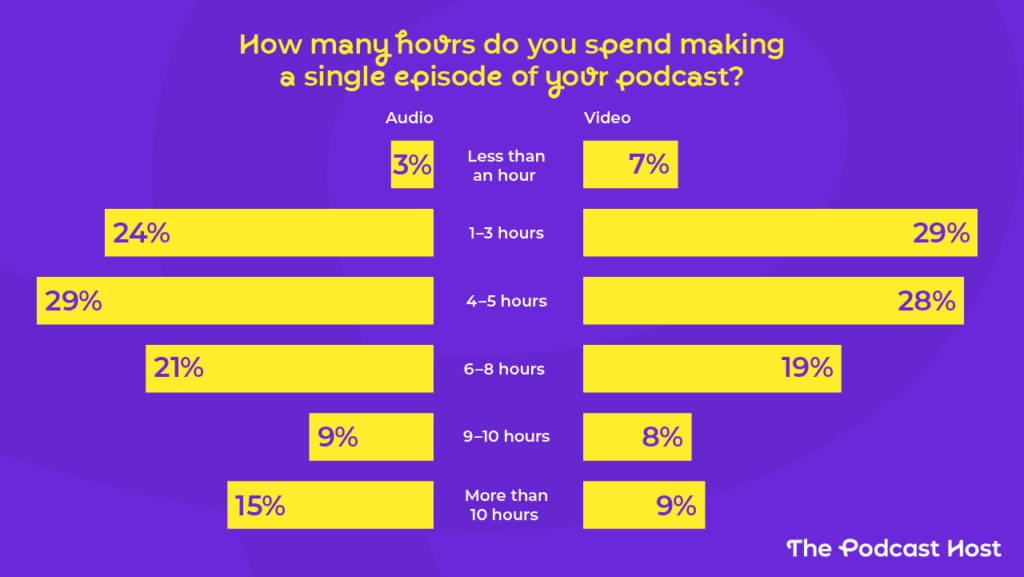
Video can bring a whole load of extra components for creators to think about – like lighting and adding animations, for example – so, at first glance, the idea that video podcasts can take less time to produce than audio-only shows was quite surprising.
But we also know that many audio creators follow a more traditional editing culture, spending extra time refining sound quality and shaping the story, while many newer video chat-style podcasts favour a quick, minimal-production approach. Not every video show works this way, but plenty do.
2. Difference in production costs
The survey data shows a clear difference in spending patterns between full video and audio-only podcasters, too. Again, you can see the trend quite clearly from this comparison graph:

Video podcasters who took our survey tend to spend more: a combined total of 50% of this group invests more than $50 each month, compared to just 28% of audio-only podcasters.
47% of audio-only podcaster respondents report spending $10–$49, compared to 28% of video podcasters in this mid-range expense bracket.
So at this stage, we might take from the data that adding video might not necessarily add more hours to your workflow, but it’s likely to cost you more. Which, of course, makes sense because podcasting software tends to charge more for packages that include video. It’s a format that requires more bells and whistles, as well as the ability to handle huge file sizes.
3. Difference in show formats
It probably won’t surprise you to hear that, amongst the creators who took our survey, solo shows were more popular amongst audio-only podcasters, while interview format shows were more popular among those who like to get in front of the camera.

36% of audio-only respondents told us they’d describe their podcast as a solo show, compared to only 24% of respondents who publish video.
Sustaining a video podcast as a solo show isn’t entirely uncommon, and lots of podcasters do it really well. But it does require a fair bit of editing for a visual audience, adding in extra clips and animations to prevent that intense staring-into-your-audience’s soul for an hour vibe.
DLake took us through his process and spoke about how his solo video show was 3x harder to create than audio, but was worth the extra effort for the return he gets.
On the other hand, recording guest interviews in video format is low-effort but is still engaging. 40% of video podcaster respondents said they run an interview-style show.
You don’t have to think hard to see how this translates to popular shows in the video podcast world right now. Most of the video podcasts that are dominating the charts right now are largely unedited interview-format shows.
4. Difference in publishing schedules
One commonality was pretty clear from the data: a weekly release schedule is most popular for respondents, regardless of whether they’re creating video or not.
But it’s also evident that those who publish video tend to lean towards higher episode output than audio.

Impressively, only 3% of video podcasters said they have no fixed release schedule, compared to 13% of audio podcasters.
This makes sense because in order to feed the algorithm on video-first platforms like YouTube and TikTok, you need to be constantly producing new content.
Compare this to something like audio drama, and a single episode can take months to put together, meaning a fiction podcaster’s release schedule is often “just whenever it’s ready”.
Is There a Problem With Having 2 Types of Podcasting?
If the Independent Podcaster Survey data is anything to go by, there’s a clear difference in mindset behind audio and video: The fast, raw, unedited, high-volume output strategy of video is a very different way of working compared to audio, which favours slower, meticulous, super-edited, highly-produced content.
But is there a problem with this? It’s not a matter of one type of podcasting being ‘better’ than the other, so surely they can happily co-exist?
Well, it’s complicated.
For example, back in July, Tom Webster wrote on the Sounds Profitable blog about how video is changing the landscape, and potentially creating new barriers for audio podcasters. He said:
“[V]ideo podcasting isn’t just changing distribution – it’s creating economic pressure toward specific [less expensive chat-show] formats, and that’s where the real threat lies… This creates genuine risk for audio’s creative diversity. Narrative podcasts, investigative journalism, fiction, experimental sound design – these formats depend on audio’s lower production barriers. If audiences and advertising dollars migrate toward video chat shows, these production-intensive audio formats could become economically unviable.“
It shouldn’t be an either or, he says, and it doesn’t have to be. He continues:
“The industry is big enough for both chat shows and audio documentaries, for YouTube growth and audio intimacy, for mainstream reach and niche artistry. The goal shouldn’t be choosing sides; it’s ensuring that economic forces don’t inadvertently narrow our creative possibilities.”
– Tom Webster at Sounds Profitable
So while the rise of video has and is doing great things for the industry, the risk lies in what we might lose if all the attention and investment go to one particular type of show.
Podcasting’s future will be strongest when its formats remain diverse. As video gains momentum, we should be intentional about preserving the space where audio-first storytelling excels, so the medium doesn’t lose the richness that made it compelling in the first place.