Are Video Clips Stealing Your Podcast Listeners?
Many podcasters use short video clips to promote their shows, whether they publish video episodes or audio-only. Clips travel well on platforms like YouTube Shorts, TikTok, and Instagram, where reach isn’t limited to existing followers.
Used well, clips can put even small podcasts in front of new audiences. Used badly, they risk becoming a substitute for the full episode rather than a doorway to it.
To see how creators feel about this trade-off, we ran a survey in our newsletter. 74% of indie podcasters said video clips encourage people to listen to full episodes. 26% believe clips can reduce long-form listening instead.
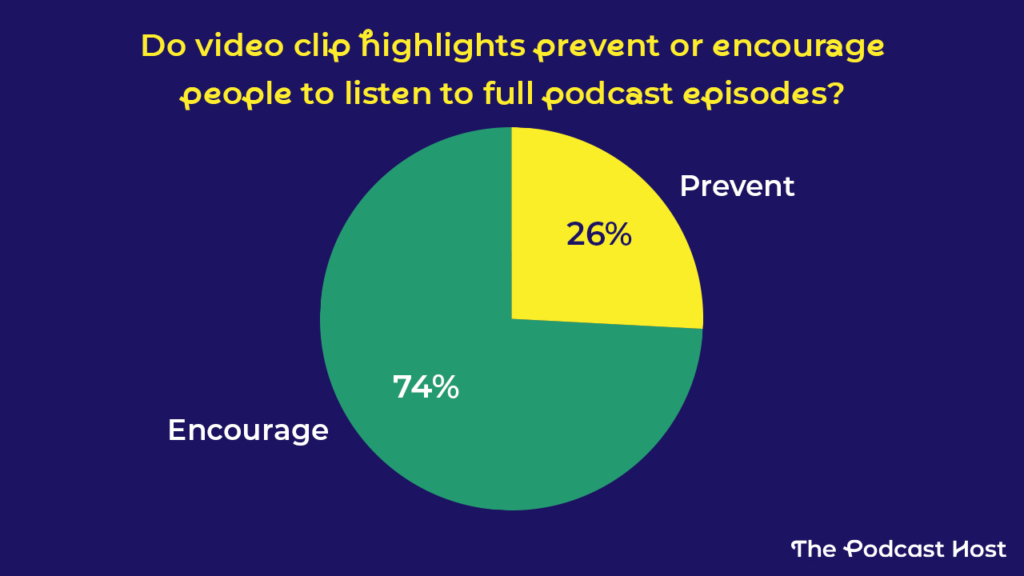
So clearly, podcasters aren’t massively concerned. But to ensure your video clips deliver, let’s dive into where the potential risks lie, and how to keep your strategy on the right track.
Reasons Video Clips Could Prevent People Listening to Episodes
You’re giving too much away
Short clips are designed to surface the most emotional, controversial, or insightful moments from an episode. For many people who spend their time on short-form platforms, that can be enough. The context is optional.
One survey respondent summed it up neatly. They told us they see short clips as a form of self-editing that surfaces the “good stuff”.
That raises an obvious problem. If the clips contain the most compelling moments, what incentive is left to hear the full episode? Why would someone switch to a listening app when they can consume the highlights alongside memes, pets, and dance clips before they even get out of bed?
These platforms encourage click consumers
TikTok, YouTube Shorts, and Instagram reels condition their users to expect rapid stimulation and dopamine hits. Listening to a full podcast episode requires attention, patience and your full engagement. It’s a really different type of content consumption.
Even when someone enjoys a clip, the habit of scrolling makes switching to a long-form listening app feel like friction. People resist leaving the feed, and platforms have no incentive to help them do so.
One podcaster who took our survey said clips “aren’t that effective because very few people (1-2%) are going off platform to consume a totally different medium.”
Short-form platform algorithms reward content that triggers quick emotional reactions, comments, likes, and shares, because those signals keep people scrolling. Content that sends users elsewhere doesn’t.
Some users think highlights ARE the podcast
Some people who consume your video clips on platforms like TikTok and Instagram won’t even think about the fact that they could spend an hour listening to a full episode. Anecdotally, I’ve noticed this can particularly be the case with younger listeners.
If you go heavy on the video clips, this can give the illusion that the podcast is a video clip show. For some consumers, the show simply doesn’t exist beyond the video platform they’re using. These people probably consider themselves loyal followers of your podcast even though they view your content exclusively as clips and have never listened to a full episode.
How to Do Video Clips Right For Your Podcast
Despite the obstacles, video clips remain an excellent way to build your podcast brand and reach totally new audiences. It’s just a matter of having the right strategy and managing your expectations.
Here are some points to think about:
Recognise that there are 2 different audiences
There’s a misconception that more exposure = more listeners, but this is rarely the case. Yes, your video clips build awareness of your podcast name and brand, but video views rarely convert to downloads.
In this sense, working with video clips means managing expectations. Platforms like TikTok and Instagram attract high-volume clip consumers. Long-form podcast platforms attract listeners who are looking for depth.
There is an overlap between those audiences, of course, but in many cases, clips will reach people who are happy to consume highlights and nothing more. For some creators, reaching any of their audience wherever they are is enough, even if they never stay for the full meal.
There are a lot of positives to that “meet them on their own terms” approach. Just be wary that any audience you attract on a social media platform is borrowed, not owned.
Treat it like a funnel tool (even if it doesn’t convert)
Lack of control or ownership means you should still do what you can to funnel clip viewers to your main podcast or newsletter.
Make sure your clips spark curiosity amongst clip consumers, and use an engaging call to action (CTA) to encourage viewers to listen or watch the whole episode (e.g. ‘check episode link in bio to find out what happened’).
But again, even if one of your video clips goes viral, don’t expect to see a spike in downloads. While you’re encouraging conversions, the bigger goal is to continually remind people that you’re not just a highlights show. You’re a podcast with a whole other life outside of these short-form platforms.
Use YouTube Shorts
YouTube Shorts is one video tool that can see high conversions if you also host full episodes on the platform. As Shorts are a YouTube feature, the algorithm doesn’t penalise content that sends viewers to full episodes – provided they stay on YouTube and don’t go anywhere else.
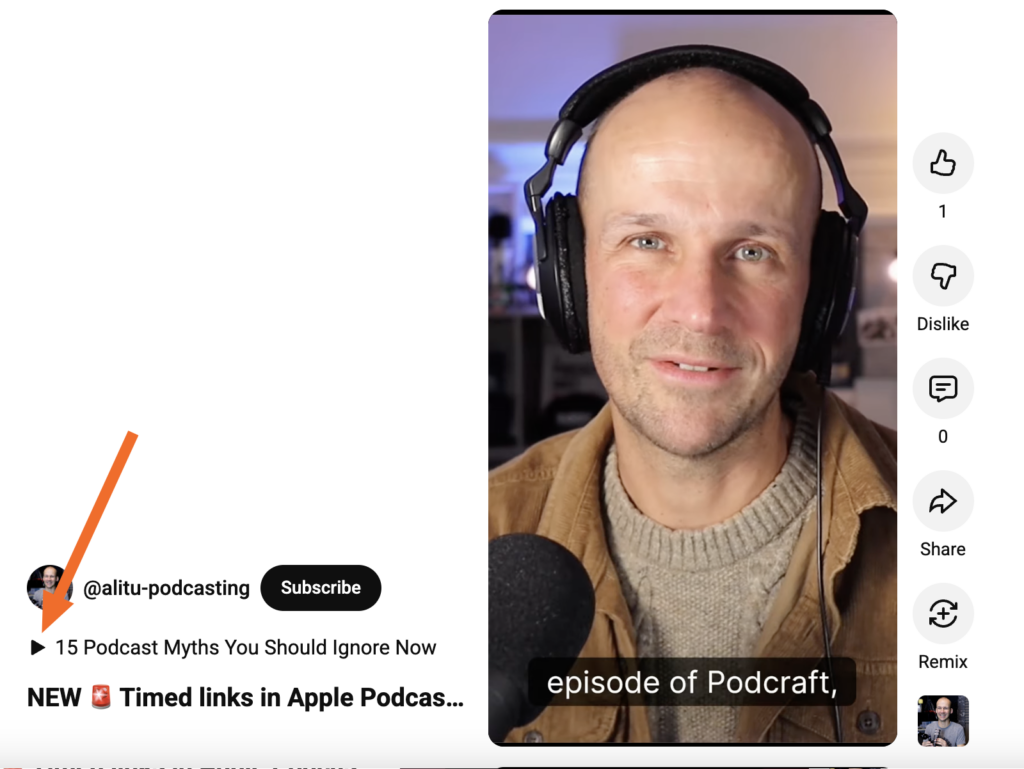
Shorts also support direct links to full episodes, making it possible for viewers to move from a clip to the full show without leaving the app. You can see the button in the image above or watch the clip to see it in action. This gives YouTube a structural advantage over TikTok and Instagram, where promotion relies on asking people to switch platforms.
Run an experiment to see what works
As with any podcast marketing strategy, it’s important to test things out to see what works specifically for your show.
For example, you could try four weeks of publishing self-contained highlights of some of the best parts of your podcast. Then, for the next four weeks, try posting teasers to see if that pushes more people to platforms that convert to downloads.
These are two quite different ways of using clips with different goals. One is to increase reach and brand awareness, while the other is to tot up more listens and downloads.
Make clips part of a wider strategy
And finally, if you’re doing video clips, it can’t be your only form of marketing. Yes, you might be having success with video clips on a particular platform right now, but algorithms are unreliable. They can change virtually overnight, and your video views plummet.
You still need to make time for all the other components of a broader podcast growth strategy, like collabs, cross-promotion and all the other tactics explored in our guide to podcast growth.
So, DO Video Clips Stop People From Listening to Full Podcast Episodes?
Usually, no. But they’re not a reliable way to increase downloads either. Clips work best as a discovery and branding tool, not as a direct conversion engine.
The real risk is not that clips replace your podcast, it’s treating clips as the product instead of a preview of something deeper.
When clips spark curiosity, clearly point to the full show, and sit within a broader growth strategy, they’re far more likely to help than harm. Use them to open the door, but accept that not everyone who looks inside will stay for the whole conversation.